
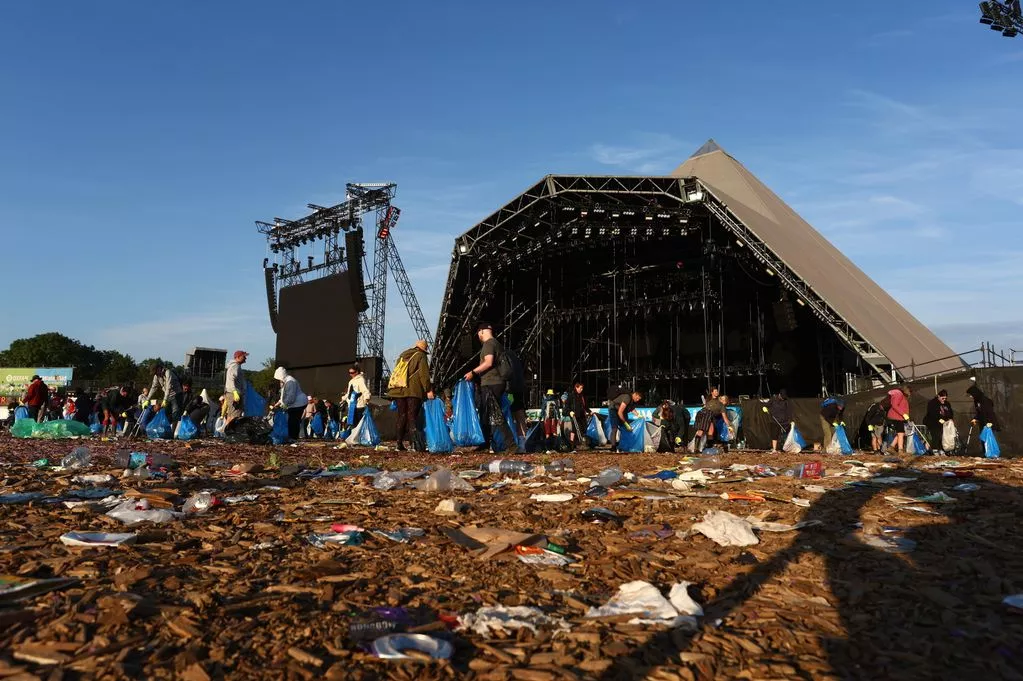
Glastonbury has come and gone. People had the time of their lives and left with memories and a buzz that will take weeks if not months to fade! From headline sets to hidden stages, it was a celebration of music, freedom and community spirit.
Yet as the exhausted, beat crowds diminished, a horrifying sea of plastic waste and abandoned tents were left in their place. Despite Glastonbury’s continued efforts to promote eco-conscious behaviour, the aftermath each year reveals the gap between intention and action. Volunteers are now working their way through tonnes of waste, cleaning it up in an attempt to return the Somerset farm to its original state.
A Designer’s Perspective
As a product design consultancy conscious of our environmental footprint, we can’t help but view this through the lens of systems thinking. What actually happens to all of Glastonbury’s waste? Thankfully it doesn’t simply get dumped. The festival operates the UK’s largest on-site event recycling facility and a team of over 1000 God-sent volunteers hand-sort the rubbish. There is a sustainability process, yet for items such as sleeping bags, tents and camping furniture, many of which are made from cheap, non-recyclable materials, they can end up in landfill.
This highlights a key issue, that part of the waste could be avoided altogether. Firstly, by better user behaviour, but as we witness, that doesn’t always happen. Secondly, through better product design and circular life processes.
Creative Reuse
Events like Glastonbury offer a powerful case study in how design can influence sustainability and be an opportunity for local enterprises:
- Design for Disassembly:Camping equipment, packaging and products could be built from single or compatible materials to make recycling easier. For example, mono-material tents made from a single fabric can then be easily shredded and recycled without separation. Additionally, designing seams that can be unstitched rather than bonded, will enable material recovery for further use.
- Creative Reuse:What could the tent materials be used for instead? There must be creative and practical ways to extend the life of festival tents, especially when they’re no longer fit for camping. Tents are often made from durable, weather-resistant materials like polyester, nylon or canvas,making them ideal for a wide range of second-life applications. Examples include; pet clothing, waterproof drybags or backpacks, festival ponchos, garden cushion covers, hammock slings… The list is endless and make for excellent independent enterprise opportunities!
- Incentivised Responsibility:Smart incentives and tracking systems promote waste return and responsible disposal. A waste return deposit system is highly recommended for companies selling or renting tents for festivals like Glastonbury. The financial reward encourages consumers to act responsibly, reducing on-site waste and environmental impact. It’s a concept grounded in circular design and already proven successful in other sectors (think bottle deposit schemes).
The Bigger Picture
Glastonbury’s waste problem isn’t unique. But the sheer size of the event reflects the wider issues society has around consumption, convenience and disposability. The post-festival waste left behind is a reminder of the disconnect between sustainability intentions and outcomes.
At ITERATE, we see this as a design challenge. Through Design for Disassembly, Creative Reuseand Incentivised Responsibility, we can rethink products and systems to minimise environmental impact and maximise circular value. Purposeful design can solve real problems, and festival waste is no exception. If you’re a brand, manufacturer or local enterprise looking to create smarter, more sustainable solutions, we’d love to collaborate, so get in touch.
*Photo credit; Tom Wren / SWNS

Jenni Manning
ITERATE Business Development Executive
Stay in the Know
Do you want to stay updated on our latest projects, client insights, future tech trends, and social media highlights? Join ITERATE’s monthly mailing list!