
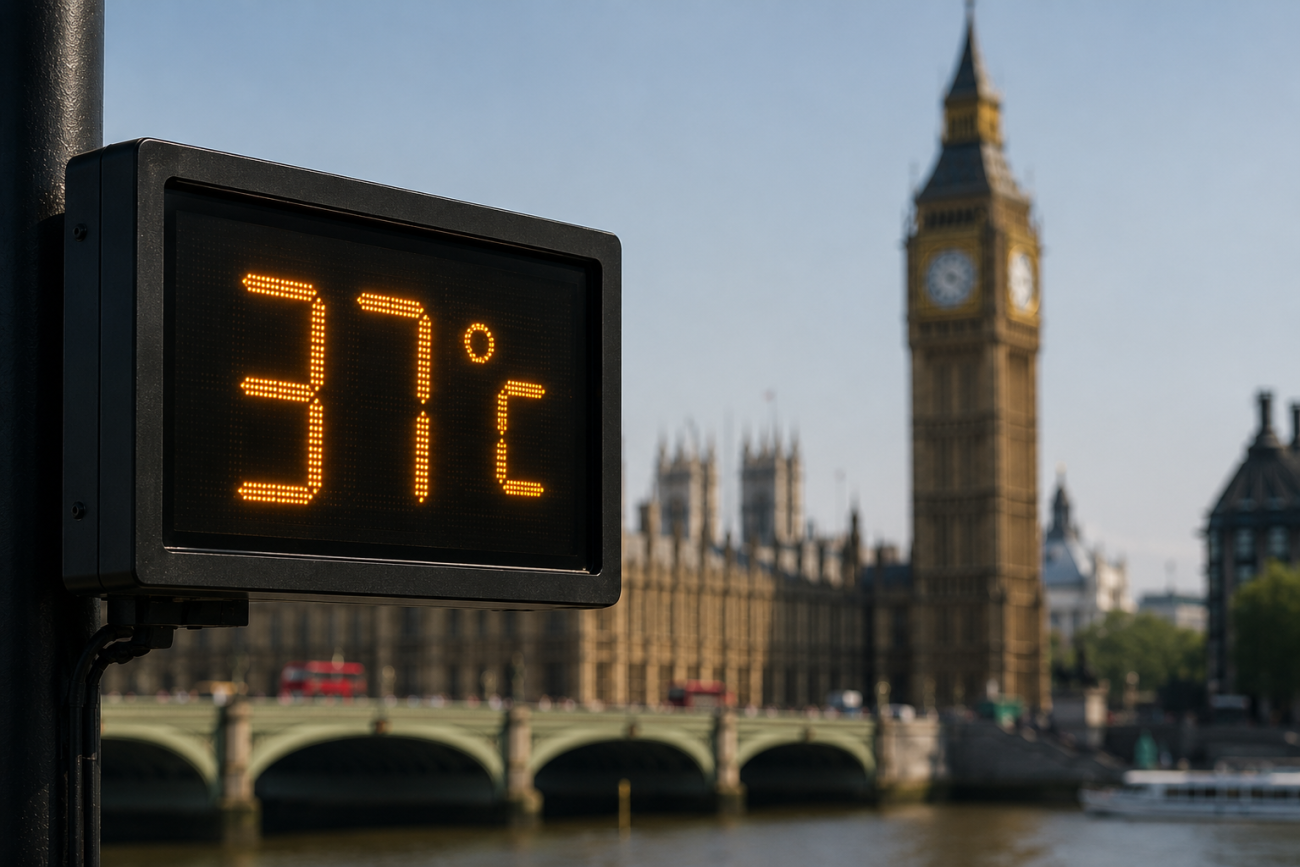
This week, fans sold out. Paddling pools disappeared from supermarket shelves. Parents received messages from schools warning about classroom temperatures. Across the country, people scrambled to find ways to stay cool.
For many, the reaction was familiar.
Britain experiences a few days of extreme weather, the headlines declare the country is struggling to cope, and then life returns to normal.
But what if this isn’t unusual anymore?
What if temperatures above 30°C become a regular feature of British summers rather than a rare exception?
From a product design perspective, that changes everything.
Designing for the Climate We Used to Have
Historically, Britain’s homes, schools, workplaces and infrastructure were designed for a very different climate. We built houses to retain heat, not reject it. Schools were designed to maximise daylight and warmth. Offices prioritised insulation over cooling. Even many everyday products were developed around the assumption that hot weather would be short-lived.
Yet consumer behaviour is already telling a different story.
Every heatwave creates a surge in demand for cooling products. Fans, portable air conditioning units, sun shades, cooling mats, insulated water bottles and outdoor shelter products all experience dramatic spikes in popularity.
Most people view this as a temporary retail trend. Product innovators should see something else entirely.
They should see evidence of unmet, long term need.
When Consumer Behaviour Starts to Change
The best products do not emerge from technology alone. They emerge from problems that people are actively trying to solve. At ITERATE, we often talk about the importance of understanding the problem before developing the solution. When millions of people simultaneously experience the same challenge, it creates a powerful signal for innovation.
The question is no longer whether people need cooling products. The question is whether we are designing enough solutions for the climate Britain is becoming…
Rethinking Schools for a Hotter Future
Take schools as an example.
During periods of extreme heat, classrooms can become uncomfortable and, in some cases, difficult environments for learning.
Many school buildings were never designed for prolonged periods of high temperatures. As heatwaves become more common each year, education providers may need to rethink everything from building design and ventilation systems to classroom layouts and shaded outdoor spaces.
The answer may not simply be installing air conditioning units everywhere. Air conditioning brings cost, energy consumption and sustainability challenges of its own.
Instead, the opportunity for innovation may lie in smarter solutions.
Passive cooling technologies, intelligent ventilation systems, heat-reflective materials, adaptive shading products and energy-efficient cooling systems could all play a role in creating more comfortable learning environments.
Similar opportunities exist across homes, workplaces, healthcare facilities and public spaces.
The Next Generation of Climate-Adaptive Products
The same principle applies to consumer products.
What new products might become standard in British households over the next decade?
Personal cooling devices, heat-adaptive furniture, smart shading systems, reflective glass, wearable cooling technologies and sustainable home cooling products could all move from niche purchases to everyday essentials.
Climate adaptation may prove to be the next major innovation driver.
Designing for Tomorrow, Not Yesterday
For product designers, entrepreneurs and businesses, the challenge is not simply responding to today’s weather. It is anticipating tomorrow’s reality.
Every sold-out fan and every overheated classroom points to the same question:
If this is becoming the new normal, are we designing for the future we want, or the past we remember?
The organisations that answer that question first will be the ones creating the products, services and experiences that define the next generation of innovation.
If you’re exploring opportunities in climate adaptation, sustainable product design, or developing products that solve emerging real-world challenges, our team at ITERATE can help.
Book a Product Strategy Call and discover how we help innovators transform ideas into commercially viable, market-ready products: https://iterate-uk.com/product-strategy-call/

Gethin Roberts
ITERATE Business Development Executive
Stay in the Know
Do you want to stay updated on our latest projects, client insights, future tech trends, and social media highlights? Join ITERATE’s monthly mailing list!