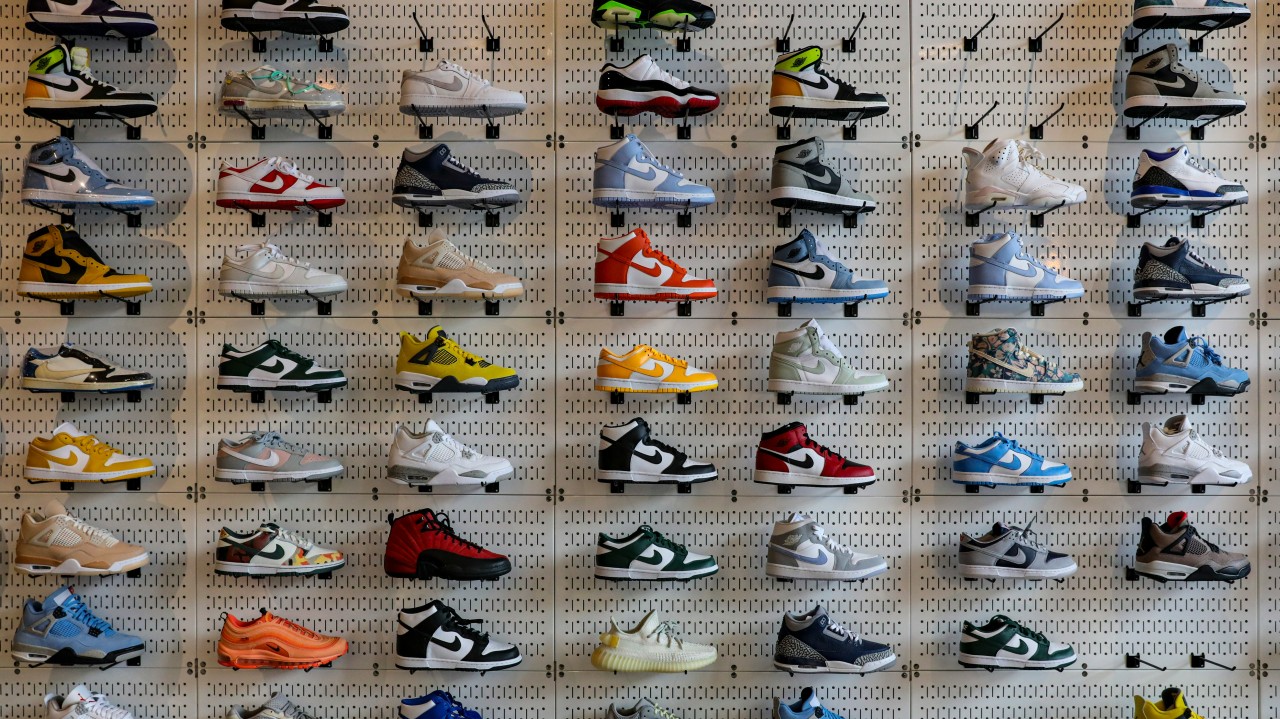
For decades, most products have been designed around a simple compromise. Create something that works well enough for the “average” user, manufacture it efficiently at scale, and accept that it will never be a perfect fit for everyone.
That approach has made sense historically. Customisation was expensive, complex, and difficult to manage once a product left the design studio and entered manufacturing. But the idea of an average user has always been flawed. People vary widely in their preferences, behaviours, physical characteristics, and expectations. Designing for the middle inevitably leaves many users adapting themselves to the product, rather than the other way around.
AI is now changing that equation. Mass customisation is evolving from a niche offering into a realistic, scalable design strategy.
The limits of one-size-fits-all design
Standardisation has been a powerful driver of efficiency, but it also introduces friction. Products optimised for the average often feel slightly wrong for everyone else. Controls are awkwardly placed, features feel unnecessary, or performance does not quite align with how people actually use the product.
In many cases, brands have attempted to address this by offering surface-level customisation. Colour choices, finishes, or minor add-ons create the impression of personalisation without meaningfully changing how the product fits the user. While these options can add value, they rarely solve deeper usability or performance issues.
True mass customisation requires a more fundamental shift in how products are designed.
Why mass customisation has been so difficult
The challenge has never been a lack of desire. It has been complexity.
Custom products introduce variation, and variation introduces risk. Engineering teams need to ensure every configuration performs reliably. Manufacturing teams need to maintain quality and efficiency. Supply chains need to remain manageable. Without careful control, customisation can quickly become expensive and error-prone.
As a result, many brands have limited personalisation to what is easiest to deliver, rather than what is most valuable to the user.
How AI changes what is possible
AI allows brands and product teams to approach mass customisation in a fundamentally different way. Instead of treating every custom product as a unique exception, AI supports the design of intelligent systems that adapt within defined boundaries.
By interpreting user inputs, preferences, and constraints, AI can guide users towards configurations that suit them while remaining viable to manufacture. Designers define the rules of the system, and AI manages the complexity within those rules.
This means users are not given unlimited freedom. They are given meaningful choice. The result is personalisation that feels thoughtful and intentional, rather than overwhelming or arbitrary.
Designing systems, not just products
One of the most important shifts enabled by AI-driven mass customisation is the move from designing fixed products to designing adaptable frameworks.
Instead of a single, static outcome, designers create modular architectures that can respond to different needs. Components, features, or parameters adjust intelligently based on user preferences, physical requirements, or usage context.
AI plays a critical role in maintaining balance. It ensures that each variation still meets performance standards, usability expectations, and manufacturing constraints. Quality and consistency are preserved, even as personal relevance increases.
This approach allows brands to offer products that feel designed for the individual, without sacrificing scalability.
Better fit leads to better relationships
When products align more closely with user needs, the benefits extend beyond initial satisfaction. Products that fit better are easier to use, more comfortable, and more intuitive. Users feel understood rather than accommodated.
From a commercial perspective, this leads to stronger loyalty, reduced returns, and clearer differentiation in crowded markets. Personal relevance becomes a competitive advantage, not just a marketing message.
Mass customisation, when done well, strengthens the relationship between brand and user.
The future of product design is personal by default
As AI becomes more integrated into product development, personalisation will increasingly be expected rather than exceptional. Users will assume that products can adapt to them, not that they must adapt to the product.
Designers will spend less time defining single outcomes and more time shaping intelligent boundaries. The focus will shift towards creating systems that respond gracefully to diversity, while maintaining clarity, quality, and purpose.
The future of mass customisation is not about endless choice. It is about better fit, delivered intelligently at scale.
If you are exploring how to design products that balance personal relevance with manufacturability, having the right development partner early on is critical. If you would like to discuss how AI-enabled design thinking could support your next product, you can book a product strategy call with ITERATE here: https://iterate-uk.com/product-strategy-call/

Gethin Roberts
ITERATE Business Development Executive
Stay in the Know
Do you want to stay updated on our latest projects, client insights, future tech trends, and social media highlights? Join ITERATE’s monthly mailing list!