I’ve been thinking a lot recently about how quickly tools like ChatGPT have shifted from being occasional utilities to something far more embedded in how we think and make decisions.
Not long ago, we used technology to look things up. Now, we use it to guide what we do next.
And that subtle shift changes everything.
From Occasional Use to Constant Dependence
I’ve noticed a change in my own behaviour. What used to be a quick search has become a running dialogue. Whether it’s problem-solving, structuring ideas, or making decisions, AI is increasingly part of the process in real time.
This isn’t just about convenience. It’s about confidence.
We’re beginning to rely on AI to provide the right information at the right moment, so we can act faster and with more certainty. And as that reliance grows, so does the expectation:
The right insight should be available exactly when I need it.
Not five minutes later. Not after unlocking a phone. Not after opening an app.
Right now.
The Interface Is Becoming the Bottleneck
This is where things start to feel misaligned.
Our primary interface with AI is still the smartphone. But smartphones are, by design, interruptive. You have to stop what you’re doing, reach for a device, shift your attention, and engage with a screen.
Even wearables like smartwatches and earbuds only partially solve this. They reduce friction, but they don’t eliminate it.
If AI is becoming a continuous layer of support, then the way we access it needs to evolve.
Because the real challenge is no longer whether information exists. It’s whether it can reach us at the exact moment it becomes valuable.
Why Facial-Mounted Technology Starts to Make Sense
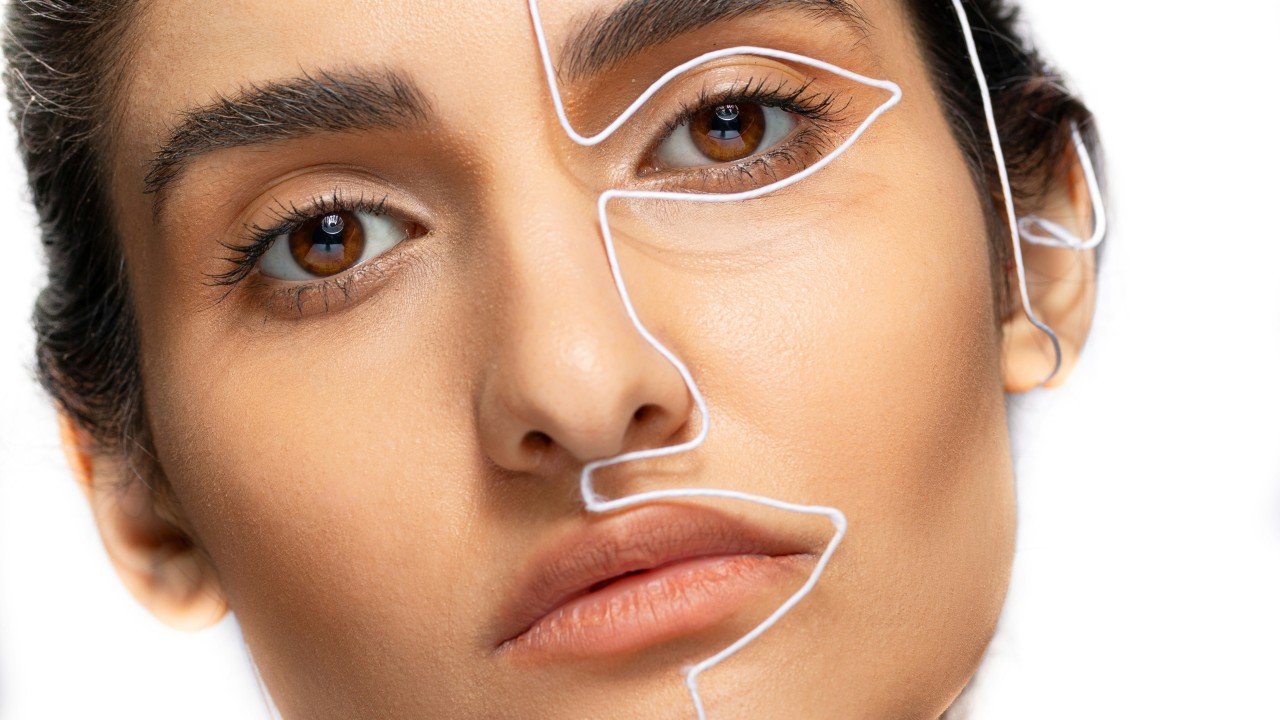
This is where facial-mounted technology stops sounding like science fiction and starts to feel like a logical next step.
Positioned closest to our primary senses, it has the potential to:
- Deliver real-time, contextual information
- Enable seamless voice and visual interaction
- Remove the gap between thinking and knowing
In other words, it could turn AI from something we consult into something that quietly supports us, moment by moment.
But this isn’t about novelty. It’s about friction reduction.
And throughout product history, the winners are almost always the solutions that reduce friction in meaningful ways.
But “Inevitable” Doesn’t Mean “Successful”
That said, there’s an important reality check here.
Just because a technology feels inevitable doesn’t mean it will succeed.
At ITERATE ®, we see this all the time. Ideas that make perfect sense on paper can struggle in the real world if they don’t solve a clearly defined, meaningful problem.
As explored in product development thinking, the biggest mistake innovators make is jumping to the solution too quickly, without fully validating the problem.
Facial-mounted technology will only succeed if it answers questions like:
- What specific problem does this solve better than existing devices?
- Is the benefit strong enough to overcome social and behavioural barriers?
- Can it be designed in a way that people actually want to wear?
Because this isn’t just a technical challenge. It’s a human one.
AI Is the Real Accelerator
What makes this moment different is AI.
Without AI, facial-mounted technology feels unnecessary. With AI, it becomes useful. And as AI becomes embedded in how we work and think, it may become expected.
That’s the shift worth paying attention to.
We’re not just designing new products. We’re redefining how humans interact with information itself.
So, Will We Wear It?
Maybe.
But the more interesting question is this:
What level of value would a product need to deliver for you to willingly wear technology on your face every day?
Because that’s the real design challenge.
Where This Goes Next
For innovators and businesses, this represents a significant opportunity, but also a complex one.
Emerging categories like this require more than just technical capability. They demand:
- Deep problem definition
- Rapid prototyping and validation
- Careful consideration of human behaviour, not just functionality
At ITERATE ®, we work with organisations to explore exactly these kinds of opportunities, helping turn early-stage ideas into viable, market-ready products through structured, end-to-end development.
If you’re exploring the future of wearable technology, AI-driven products, or new product development more broadly, it’s worth having a conversation.

Gethin Roberts
ITERATE Business Development Executive
Stay in the Know
Do you want to stay updated on our latest projects, client insights, future tech trends, and social media highlights? Join ITERATE’s monthly mailing list!