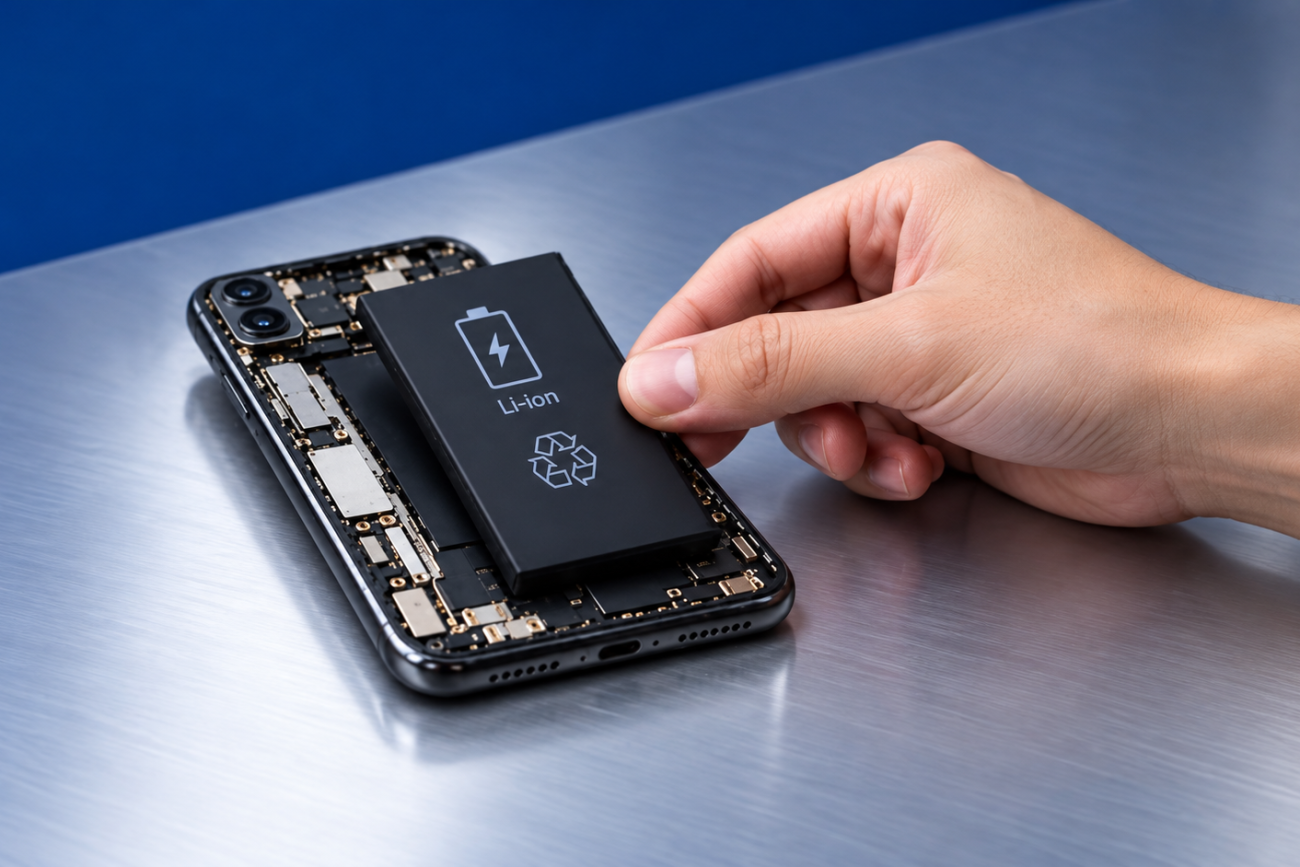
For years, product designers have pursued smaller, sleeker and more sophisticated electronic devices. Batteries have become increasingly integrated, enclosures more compact and internal components less accessible.
But this pursuit of seamless design has created a problem. What happens when a perfectly functional product becomes unusable simply because its battery can no longer hold a charge?
It’s a question that’s becoming increasingly difficult to ignore.
From February 2027, new requirements under the EU Batteries Regulation will affect how batteries are removed and replaced in many products placed on the European market. While the rules contain specific exemptions, they signal a broader shift towards products designed with maintenance and longevity in mind.
For manufacturers, this presents an engineering challenge. But it also raises a more interesting question: could rethinking something as simple as battery accessibility lead to better products?
When Constraints Become Catalysts for Innovation
Innovation isn’t always driven by technological breakthroughs or entirely new inventions. Sometimes, it emerges when an established approach is no longer fit for purpose.
Consider how batteries are integrated into modern electronic devices.
Often concealed within tightly packed assemblies, they may be secured using adhesives or enclosed within housings that weren’t designed to be opened. While these approaches can support compact, streamlined designs, they can make replacing a battery impractical.
Making that battery accessible changes the engineering brief considerably.
Suddenly, designers must reconsider the enclosure, internal component layout, fastening mechanisms and electrical connections. They must balance accessibility with durability, aesthetics and, where necessary, resistance to water and dust.
A seemingly straightforward requirement can influence almost every aspect of a product’s construction.
The challenge isn’t simply making the battery removable. It’s achieving this without compromising what makes the product successful in the first place.
And solving that challenge demands creative engineering.
Rethinking Products from the Inside Out
Rather than treating battery accessibility as a modification to an existing design, manufacturers have an opportunity to rethink how their products are constructed.
Could a modular architecture allow components to be replaced independently? Could an innovative fastening mechanism provide reliable access without compromising appearance? Could reconfiguring internal assemblies simplify both manufacturing and future servicing?
These questions encourage designers to look beyond the immediate challenge and consider the product as a complete system.
Of course, every solution introduces trade-offs. A removable panel may affect structural integrity. Additional fasteners can increase assembly time. A redesigned enclosure may introduce new tooling requirements.
This is why early-stage design exploration and prototyping are so important.
Testing different configurations, mechanisms and materials before committing to manufacture allows engineers to identify potential problems, evaluate alternatives and refine solutions.
What begins as a constraint can ultimately lead to a more considered, efficient and adaptable design.
Designing for Longevity Makes Commercial Sense
Beyond the engineering challenges lies a broader commercial opportunity.
A product that can be maintained rather than discarded may offer greater long-term value to customers. For manufacturers, improved serviceability could support replacement component sales, refurbishment programmes and stronger customer relationships.
It may also offer a point of differentiation in markets where sustainability and product longevity increasingly influence purchasing decisions.
However, designing for longevity isn’t simply about making products last longer. It’s about ensuring that durability, functionality, manufacturing cost and commercial viability work together.
A sustainable design must still be a successful product.
Better Design Begins with Better Questions
At ITERATE, we believe the most valuable innovations often emerge when established assumptions are challenged.
Through our structured product development process, we help businesses explore technical possibilities, assess feasibility and validate engineering solutions through iterative prototyping.
As expectations around product repairability and longevity evolve, manufacturers have an opportunity to think differently about how products are designed, assembled and maintained.
Those who embrace these challenges early may discover opportunities that extend well beyond meeting new requirements.
Because innovation doesn’t always mean inventing something new. Sometimes, it means finding a better way to design what already exists.

Gethin Roberts
ITERATE Business Development Executive
Stay in the Know
Do you want to stay updated on our latest projects, client insights, future tech trends, and social media highlights? Join ITERATE’s monthly mailing list!