On April 22, Earth Day reminds us that sustainability is no longer a side conversation – it is central to how we design, manufacture and consume.
For businesses developing new products, this shift is impossible to ignore.
Consumers are more informed, more conscious, and more selective than ever. They are not just buying products – they are buying into values. And increasingly, they expect those values to include environmental responsibility.
For a modern product design consultancy UK, this raises an important question:
How do you design products that are not only commercially viable, but environmentally responsible from day one?
Sustainability Starts at the Design Stage
The decisions made early in the product development process have the greatest impact on long-term success.
The same is true for sustainability.
Material selection, manufacturing methods, product lifespan and supply chain strategy are all defined at the design stage. If sustainability is not considered early, it becomes difficult – and expensive – to retrofit later.
At ITERATE, this is embedded into our RPD Pathway, ensuring that sustainability is not an afterthought, but a core design principle within our new product development process.
Case Study: Intelligent Solar Panel System
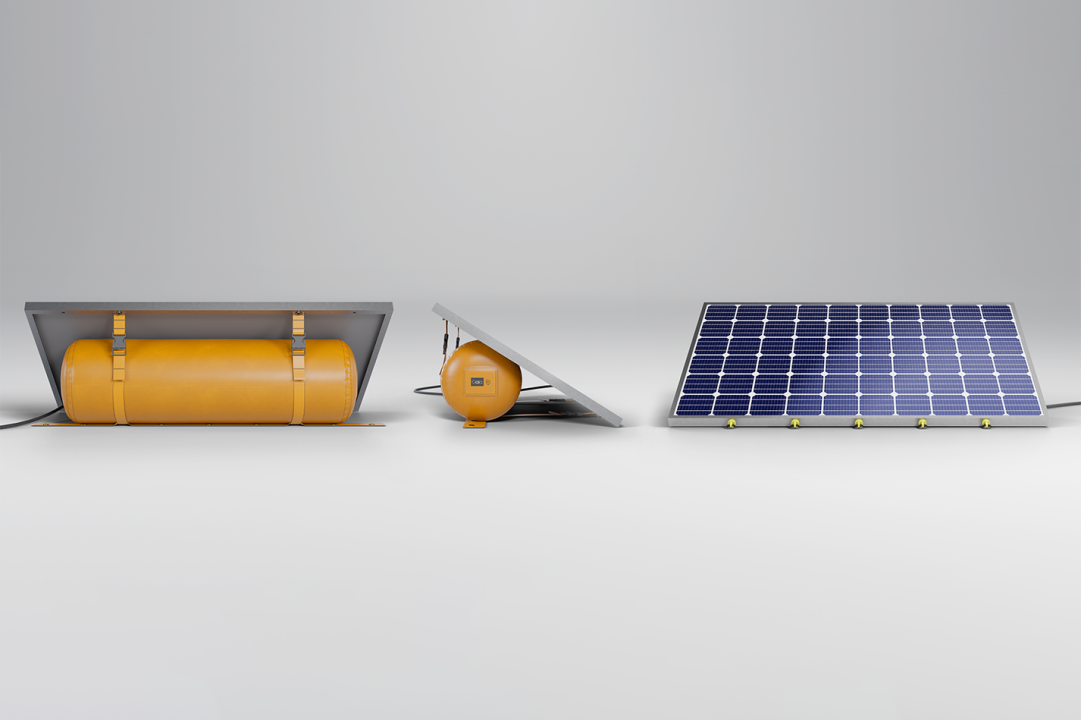
One example of this approach is our work on an intelligent solar panel system.
This project focused on enabling smarter energy usage – helping users optimise renewable energy consumption in real time.
It is a clear example of how innovation support and product strategy can align commercial opportunity with environmental impact. The product is not just functional – it actively contributes to reducing energy waste.
Case Study: 3D Printed Razor
Sustainability is not always about large-scale systems. Sometimes, it is about rethinking everyday products.
In this project, we explored how additive manufacturing could reduce material waste while maintaining performance and aesthetics.
Traditional manufacturing often requires excess material, tooling and offcuts. In contrast, additive manufacturing builds only what is needed – layer by layer.
This significantly reduces waste and opens up new possibilities for lightweight, efficient product design.
Case Study: Custom Golf Putter Grip
Another example of a sustainable product is our custom golf putter grip project, which demonstrates other benefits of additive manufacturing – precision and personalisation.
By producing only what is required for each user, we reduce excess production and inventory waste. This aligns with a broader shift towards on-demand manufacturing, where products are made as needed rather than mass-produced unnecessarily.
The Role of Additive Manufacturing in Sustainable Design
Additive manufacturing is becoming a key enabler for sustainable product development.
It allows for:
- Reduced material waste
- Lightweight, optimised structures
- Localised production, reducing transport emissions
- Faster iteration, minimising failed prototypes
For businesses exploring prototype development services, this means sustainability can be built into both the development process and the final product.
Responding to Changing Consumer Expectations
The shift towards sustainability is not theoretical – it is being driven by real consumer behaviour.
Buyers are increasingly asking:
- Where is this product made?
- What materials are used?
- How long will it last?
- What happens at end-of-life?
As highlighted in The Product Innovator’s Handbook, products succeed when they genuinely solve problems and align with user needs.
Today, one of those needs is clear: responsible consumption.
Designing with Purpose
At ITERATE, sustainability is not a trend. It is part of a broader commitment to purposeful innovation.
As a globally connected product design consultancy, we are continuously evolving how we design, prototype, and manufacture products to reflect:
- Environmental responsibility
- Technological advancement
- Changing market expectations
Because the future of product development is not just about what we create – it is about the impact those creations have.
Ready to Build a More Sustainable Product?
If you are looking to develop a product that meets both commercial and environmental goals, we can help.

Gethin Roberts
ITERATE Business Development Executive
Stay in the Know
Do you want to stay updated on our latest projects, client insights, future tech trends, and social media highlights? Join ITERATE’s monthly mailing list!