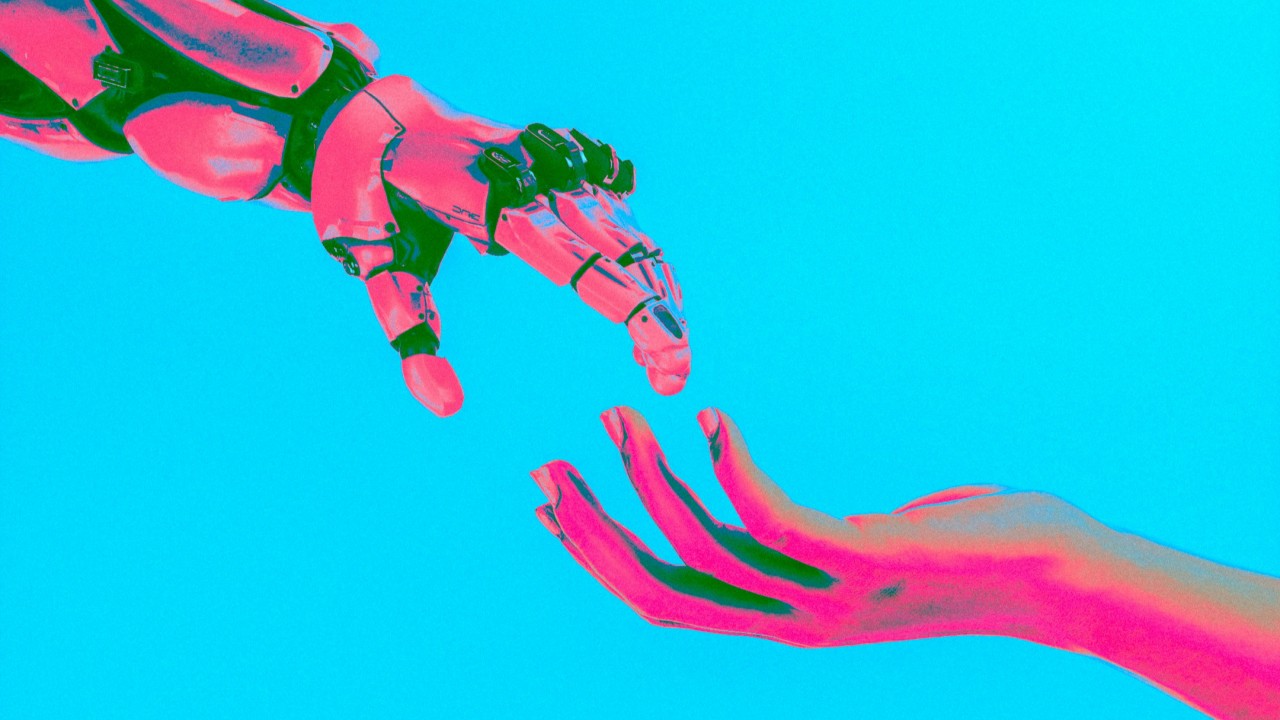
Every so often, a technology arrives that doesn’t just solve problems – it reveals them. Artificial intelligence is now doing exactly that. Rather than simply helping designers optimise concepts or speed up development cycles, AI is beginning to expose hidden behaviours, overlooked inefficiencies, and emerging human needs that have quietly existed beneath the surface for years. And once those previously invisible problems come into focus, an entirely new category of physical products suddenly becomes possible.
We’ve entered an era where the products of tomorrow won’t be born from a person spotting a frustration in their daily life. They’ll emerge because AI has uncovered a pattern, a shift, or a tiny behavioural nuance that no human ever noticed – yet millions silently experience.
When problems hide in plain sight
Humans are remarkably adaptable. We put up with minor inefficiencies for years without recognising them as problems. We build workarounds. We compensate. We stop questioning whether something could be better.
AI has no such blind spots. Its ability to analyse behavioural data, environmental conditions, and complex interactions makes it particularly good at spotting friction that is too subtle for us to detect.
Consider home healthcare. People often adjust their routines unconsciously to compensate for discomfort, mobility changes, or daily strain. AI-driven behaviour analysis is beginning to reveal consistent micro-patterns – repeated movements, missed signals, irregular routines – that suggest entirely new opportunities for assistive devices. These aren’t products people would ever think to ask for, because they don’t know the underlying problem exists. Yet once identified, the solution becomes obvious.
We’ve seen similar patterns in consumer products, too. A few years ago, ITERATE ® worked on an air-quality monitor that emerged not from a human frustration, but from analysing market behaviour. The insight wasn’t that people hated pollution – that was obvious. The real discovery was that existing devices were too complex and too app-dependent, delaying their adoption. By reframing the problem through a behavioural lens rather than a technical one, a new kind of product became possible: a simpler, self-contained monitor designed for immediate use. It’s a small example, but it captures a much larger shift. AI will push this kind of insight far further than humans alone ever could.
Products we could never have imagined
What makes AI-native product opportunities so interesting is that they don’t follow the typical “spot a problem, think of an idea” pathway. Instead, AI works backwards. It uncovers:
- Tiny physical inefficiencies
- Emotional patterns that don’t appear in surveys
- Environmental triggers or constraints
- Clusters of behaviours that signal unmet needs
- Variations in movement, posture, or ergonomics
- Predictions about routines that don’t yet exist, but soon will
From those insights, entirely new product categories emerge.
Imagine daily objects that shift shape because AI has detected subtle wrist fatigue patterns across millions of users. Or domestic devices designed around overlooked micro-routines, rather than the tasks we consciously think we’re performing. Or medical tools created because AI has spotted early changes in the way patients move, breathe, or interact with their environment long before symptoms appear.
These are not products a human would ever dream up from scratch. They are solutions to problems we never perceived.
A new frontier for designers and innovators
This shift doesn’t make the designer obsolete – it elevates them. The role now becomes interpreting, challenging, and shaping AI-discovered insights into meaningful, manufacturable, human-centric objects. Designers become translators between what the data says and what people will genuinely value.
And this is where the future gets exciting. Once hidden problems become visible, the boundaries of what we can physically create expand. We stop designing only for the frustrations we already know, and begin designing for behaviours, environments, and needs that have never been served before.
For companies willing to lean into this future, AI won’t just accelerate development. It will open markets that didn’t previously exist.
Looking ahead
We are only at the very beginning. As AI continues to analyse how we live, move, work, and interact, the next wave of physical products will feel surprisingly intuitive. They’ll address needs we never articulated, solve problems we didn’t recognise, and slot into the rhythms of life with an ease that feels almost uncanny.
That’s the true power of AI-native products. Not automation. Not optimisation. But revelation.
If you’re exploring a new product idea – or wondering what hidden opportunities AI might uncover in your market – our team would love to help you shape the path ahead.
Book a product strategy call at: https://iterate-uk.com/product-strategy-call/
Gethin Roberts | iterate-uk.com | gethin@iterate-uk.com

Gethin Roberts
ITERATE Business Development Executive
Stay in the Know
Do you want to stay updated on our latest projects, client insights, future tech trends, and social media highlights? Join ITERATE’s monthly mailing list!