
Children's Walking Aid.
Refining a bespoke walking stick through additive manufacturing to improve comfort, stability and durability.
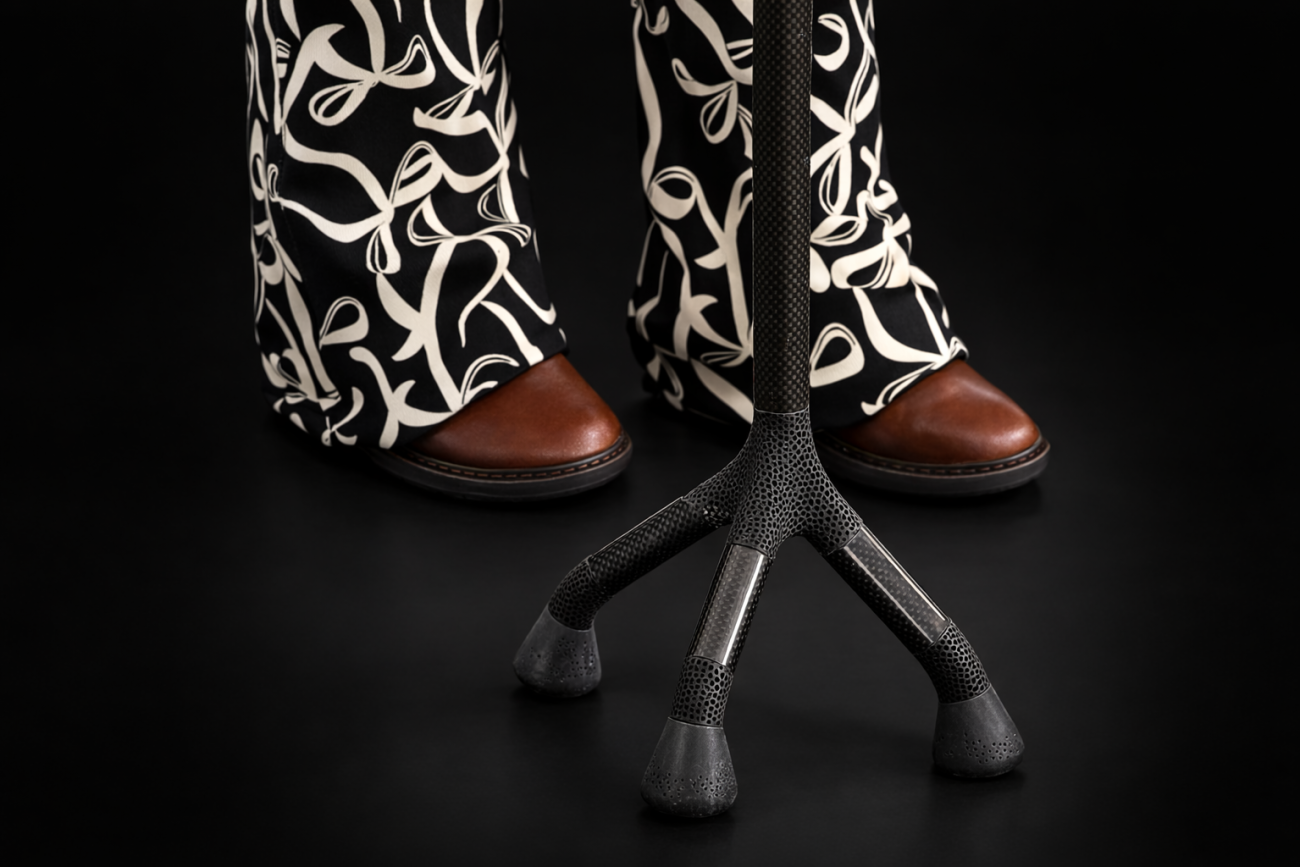
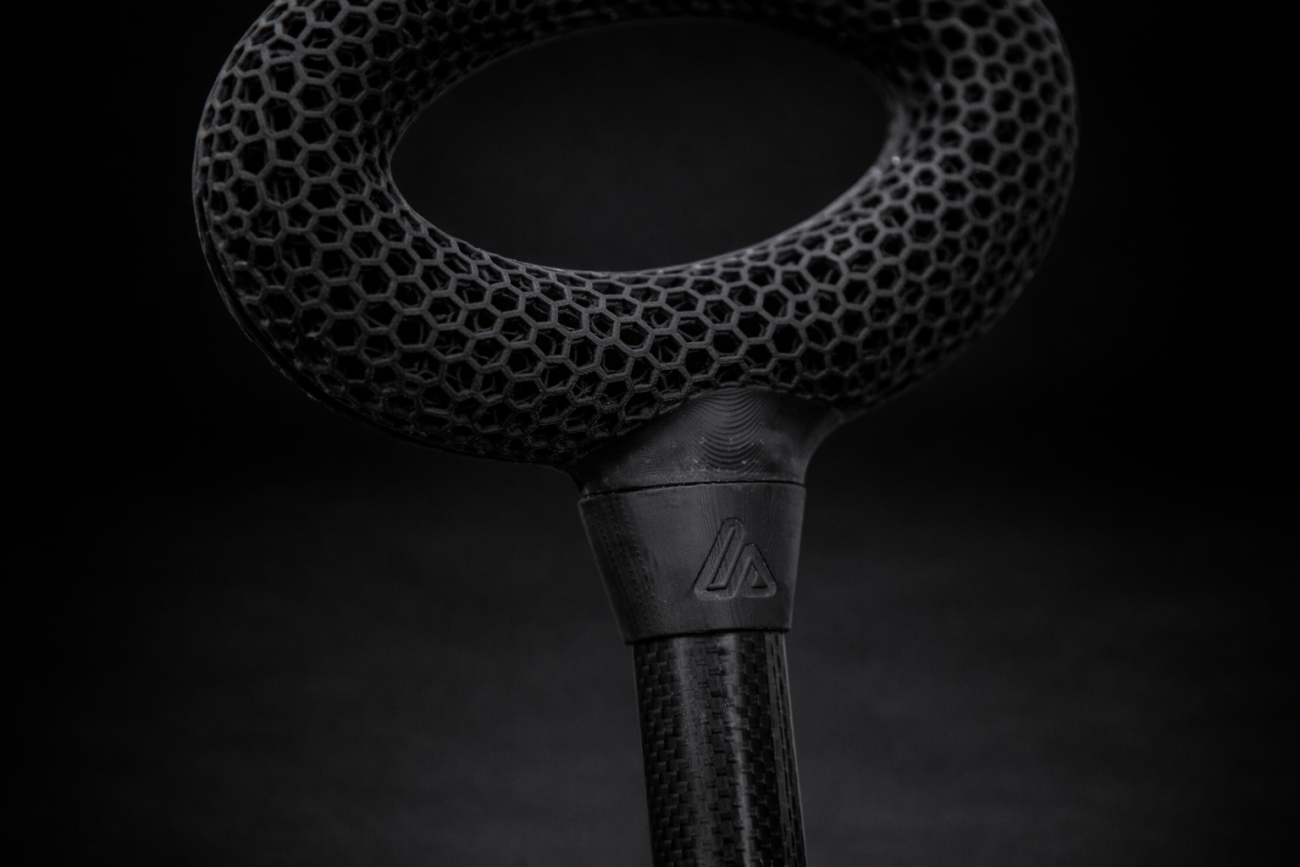
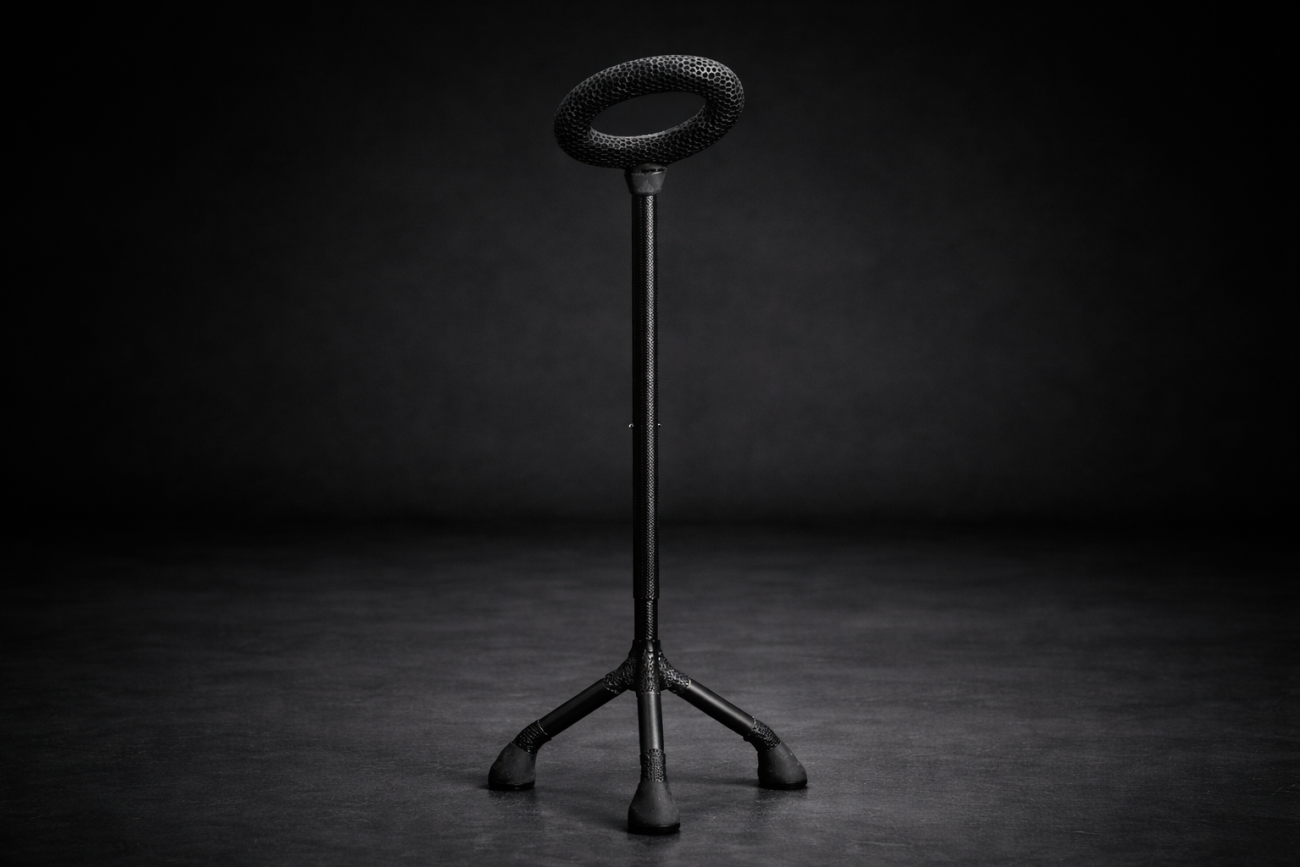
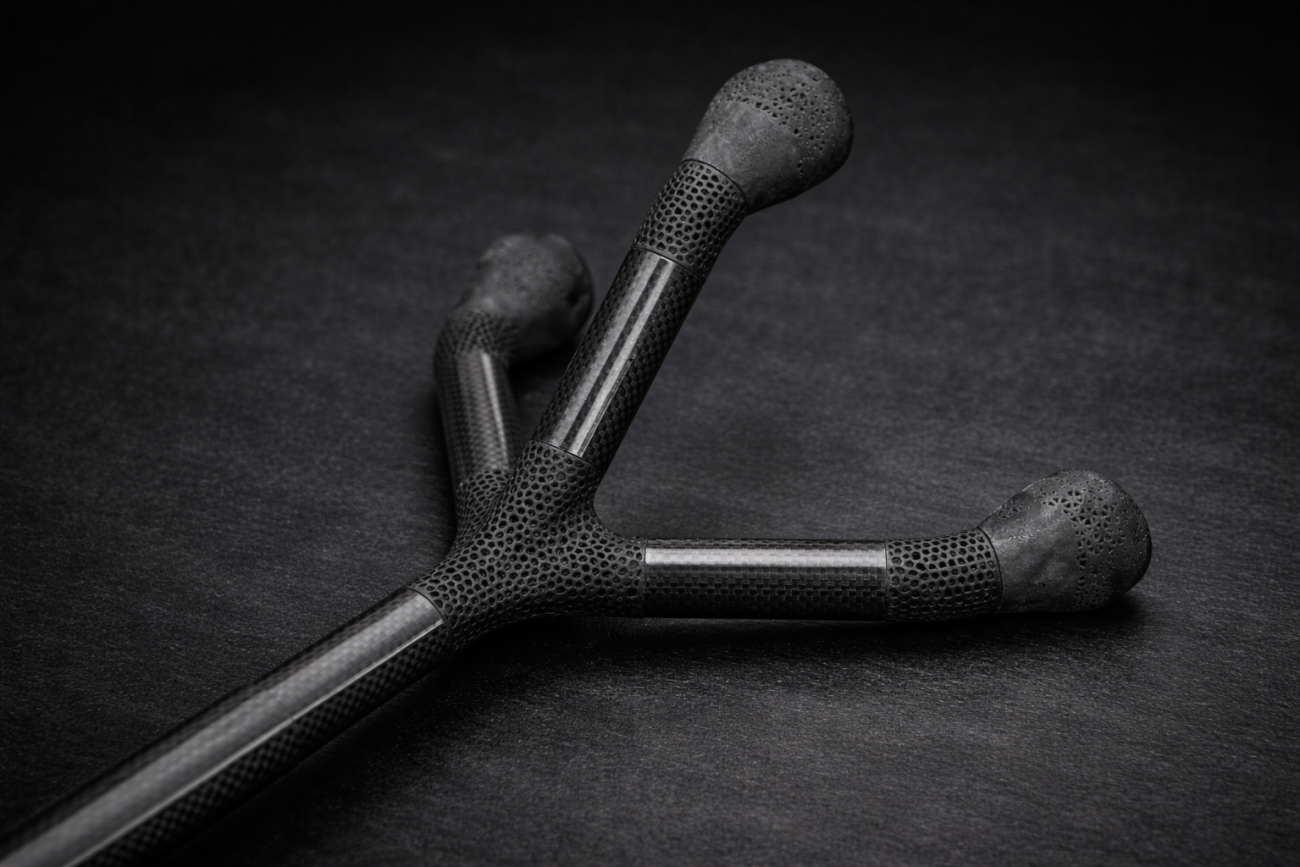
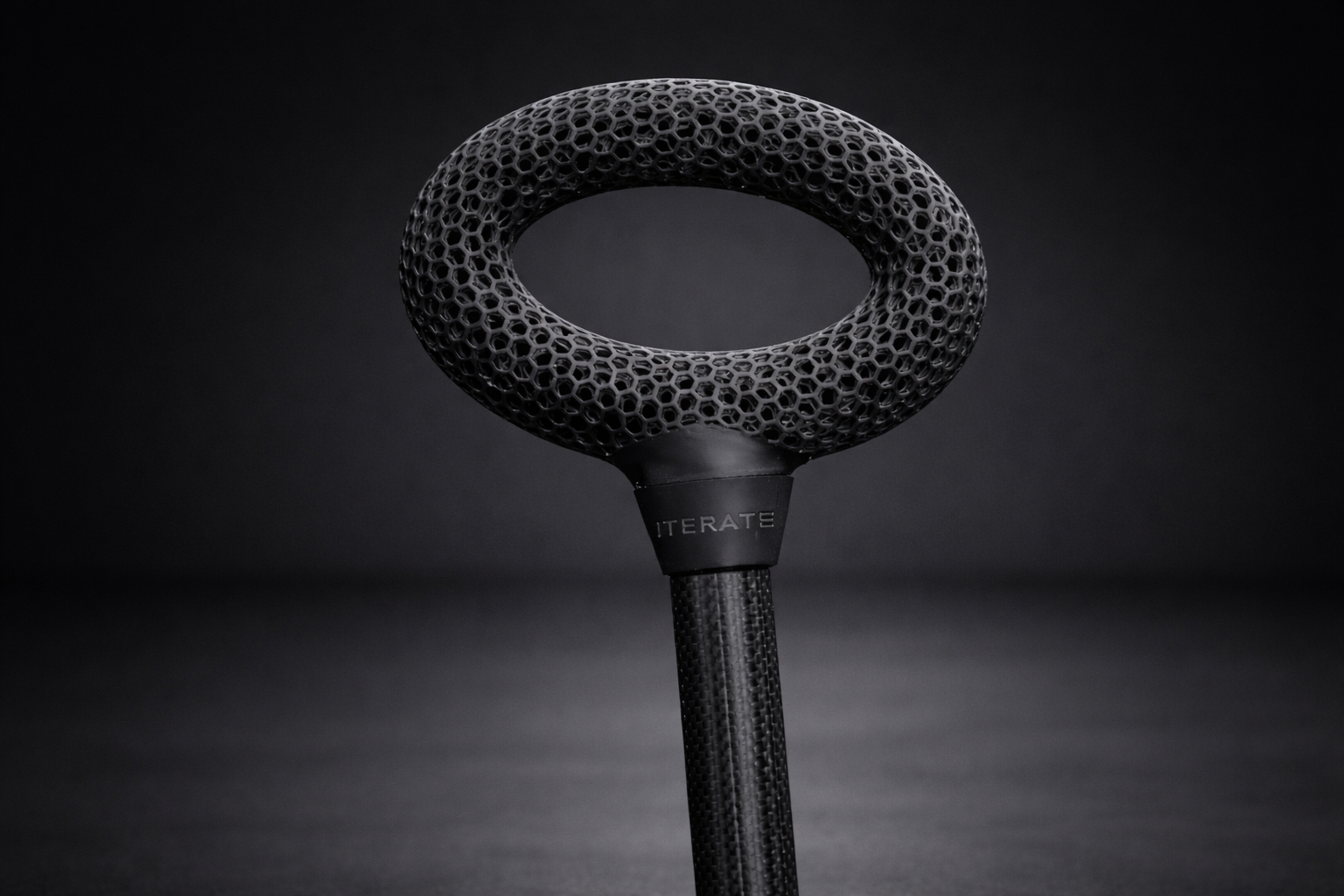
Children who rely on walking aids often face equipment that is poorly adapted to their needs. Many conventional walking sticks are derived from adult products, resulting in uncomfortable grips, limited stability and components that wear quickly under repeated use. For children with disabilities, these limitations can affect confidence, mobility and long-term usability.
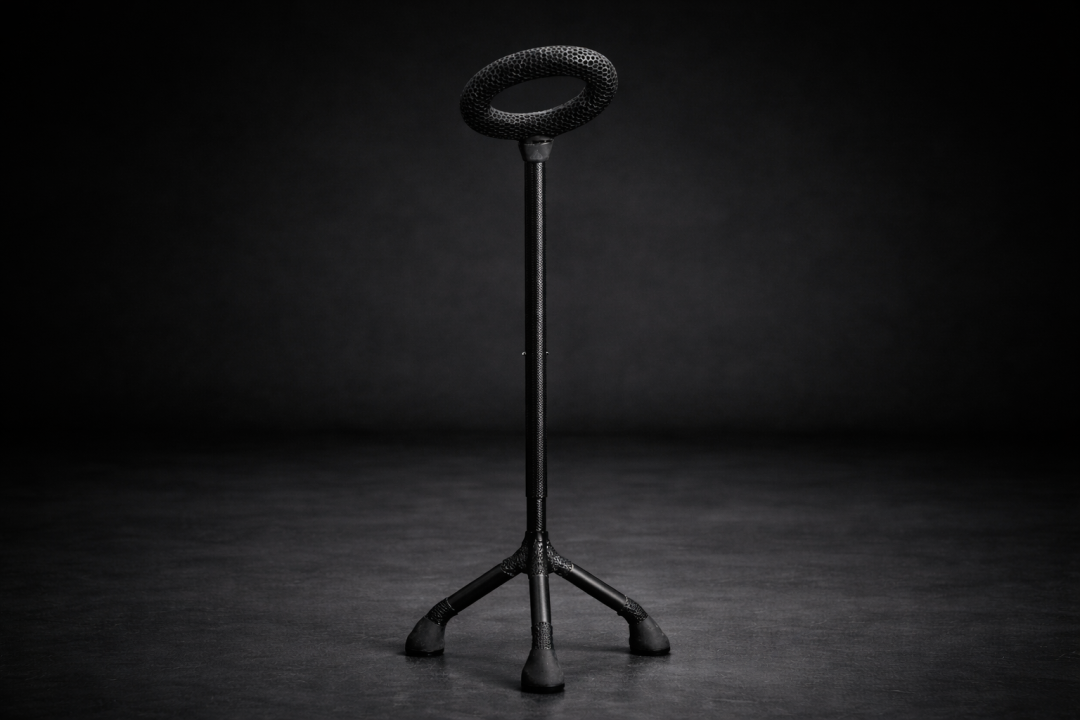
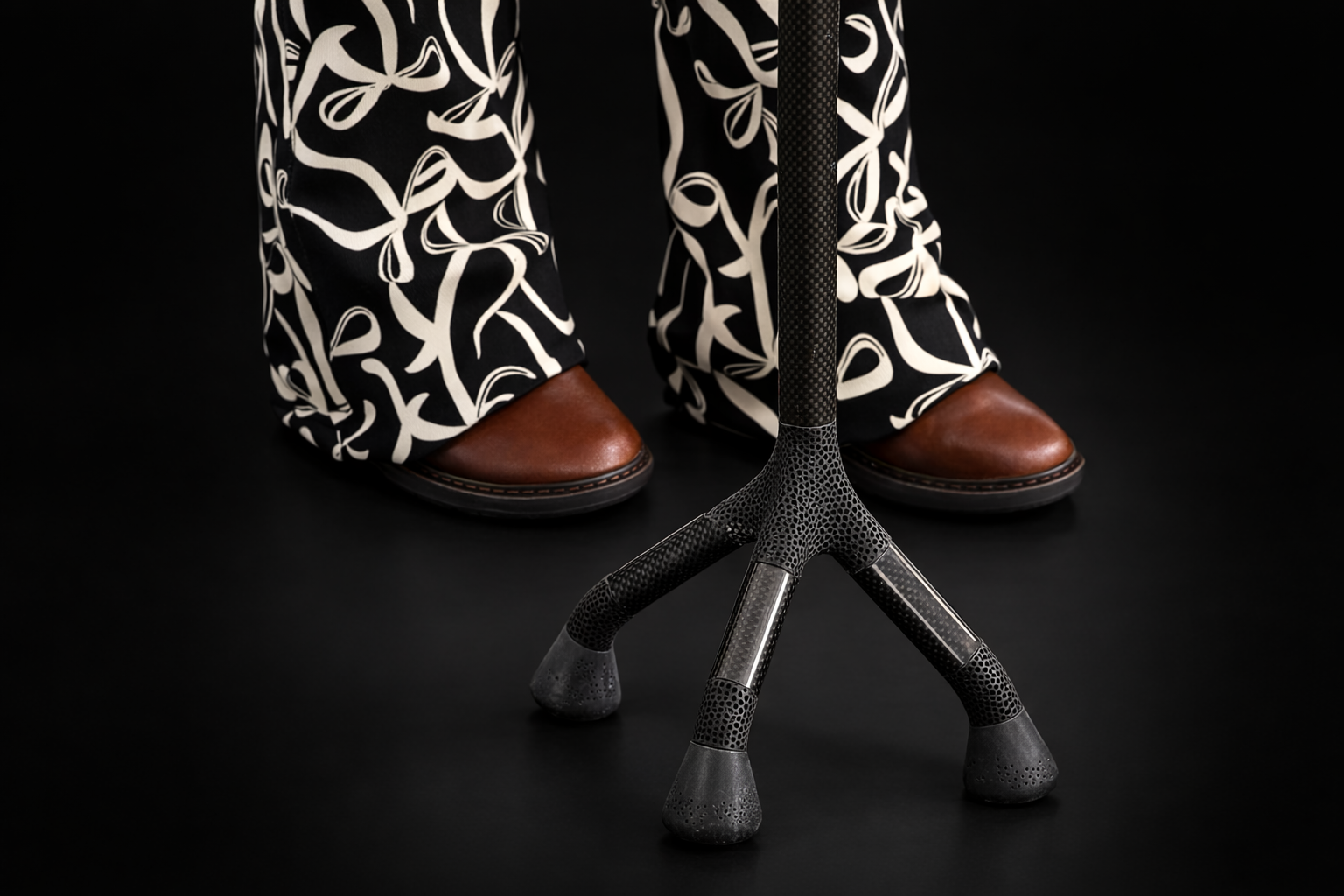
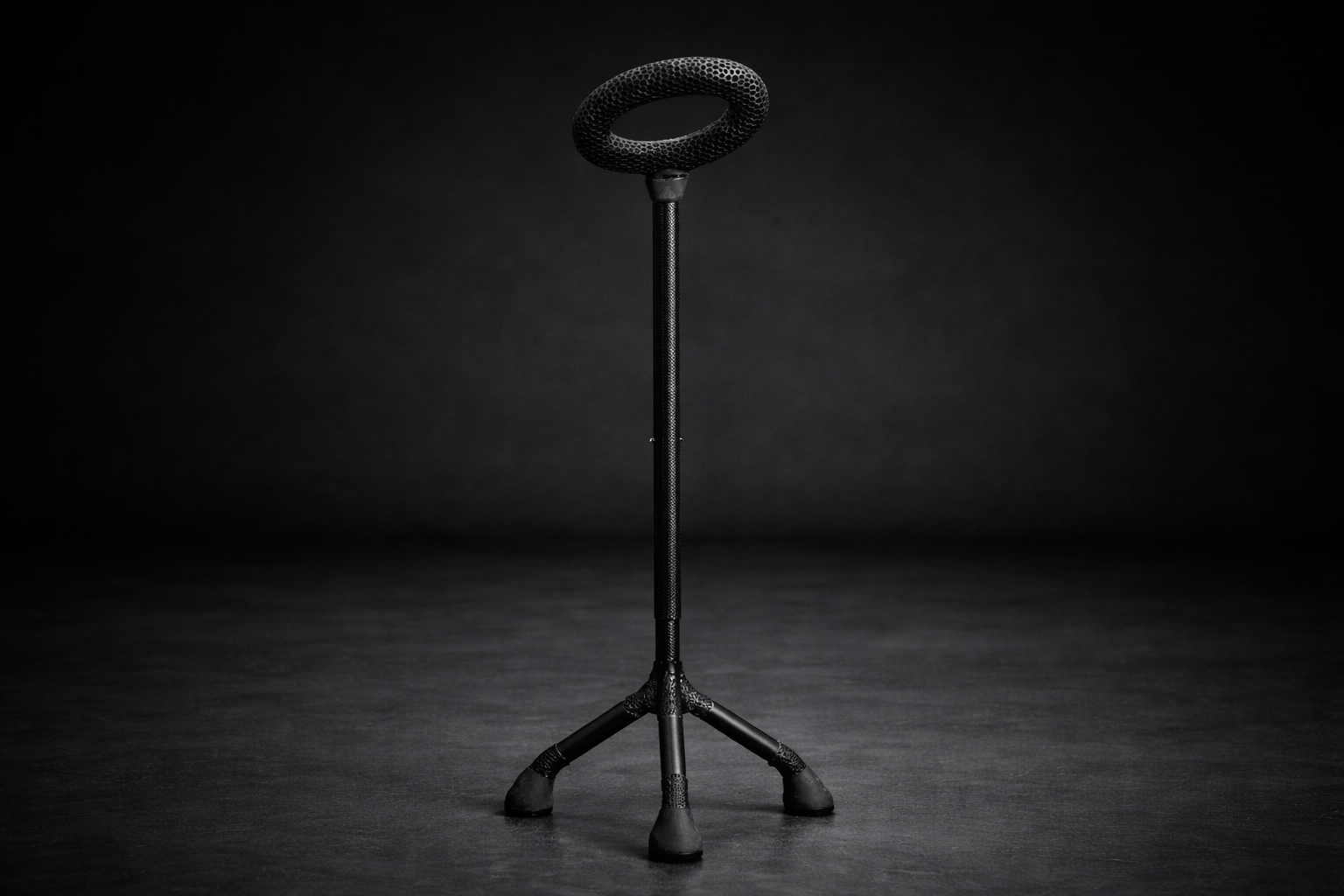
Working in collaboration with the Cerebra Innovation Centre at University of Wales Trinity Saint David, ITERATE refined an existing walking stick concept to improve ergonomics, durability and manufacturing efficiency using advanced additive manufacturing. Rather than redesigning the entire product, the focus was placed on three critical components: the handle, the feet and the structural connectors.
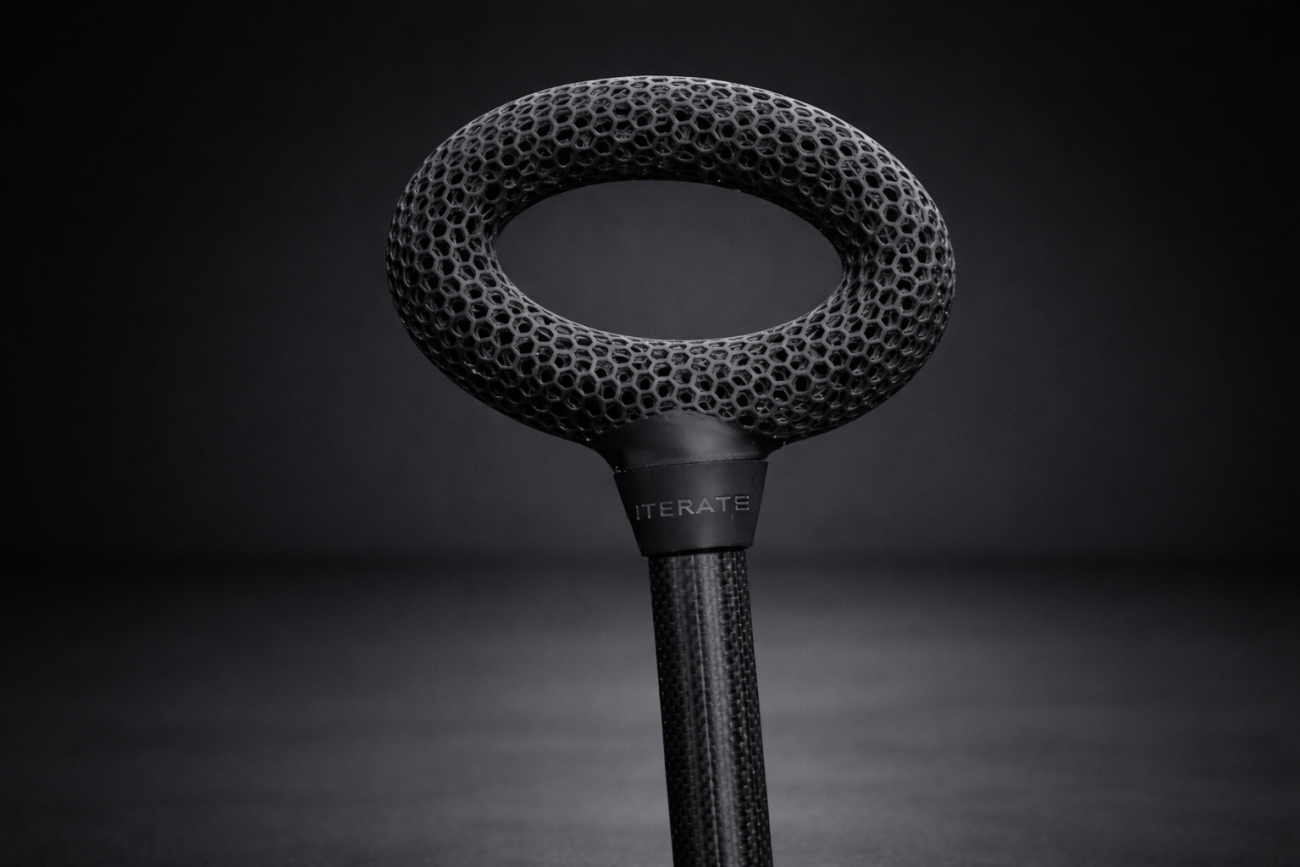
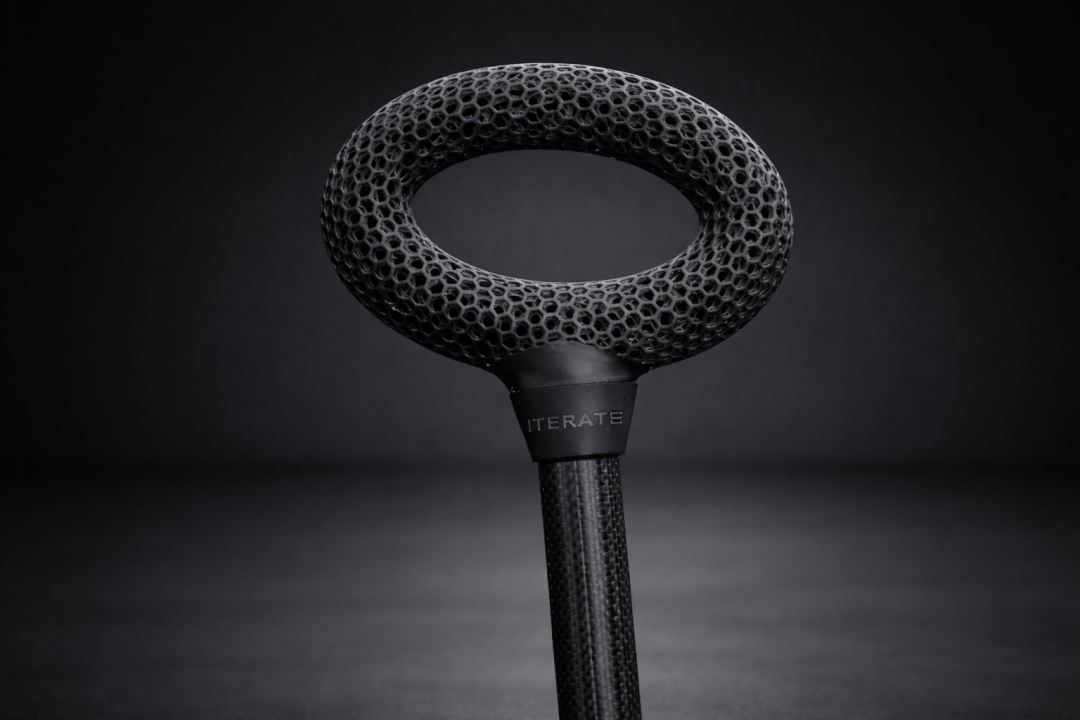
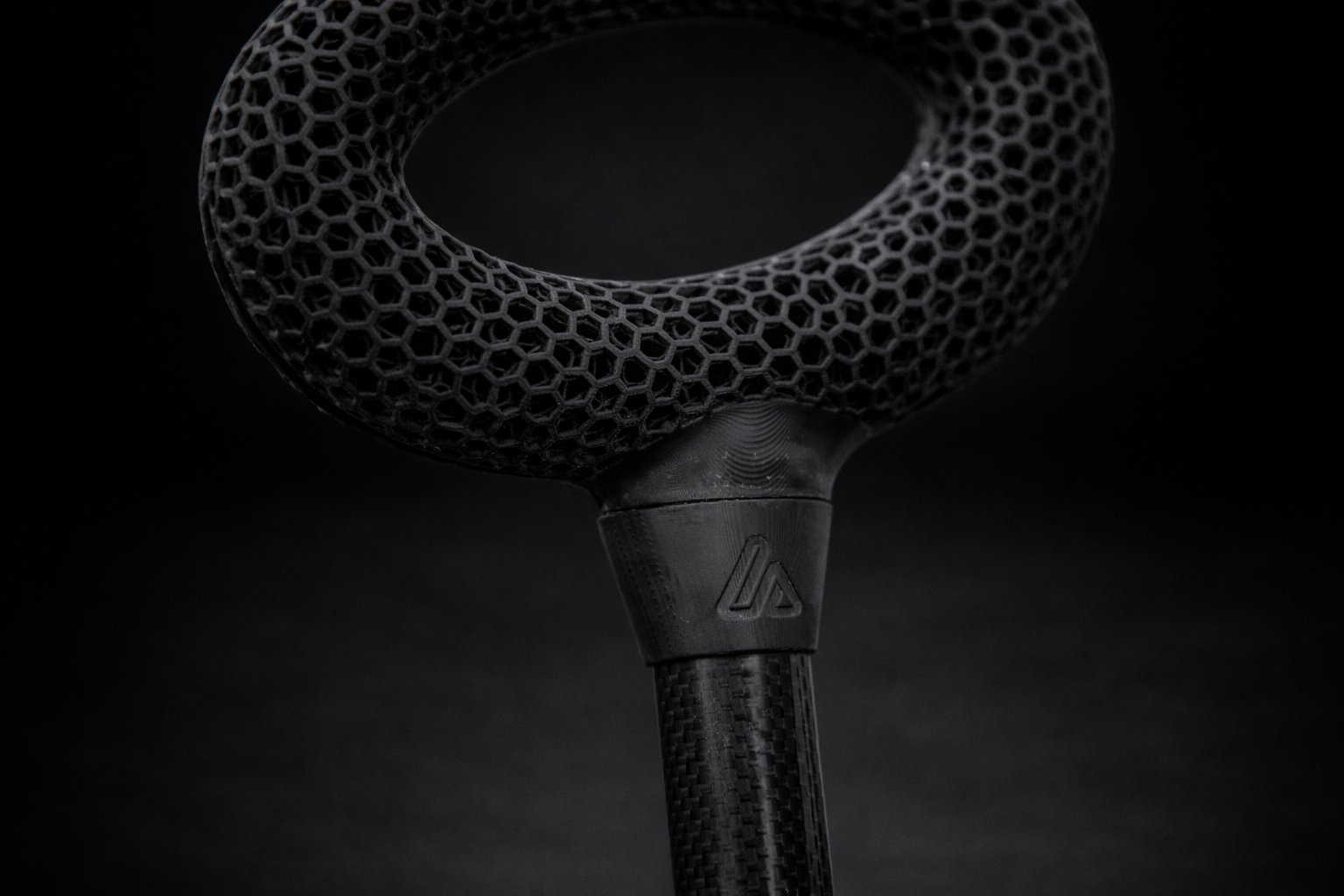
The handle was redesigned using Carbon’s EPU 70 Pro Expand, a tunable elastomer engineered to expand after printing. This property allowed the component to be printed at a smaller scale, improving build efficiency while enabling cost-effective small-batch production. Once expanded, the material provides a soft, resilient grip with controlled energy return, delivering greater comfort for users who depend on the walking stick throughout the day.
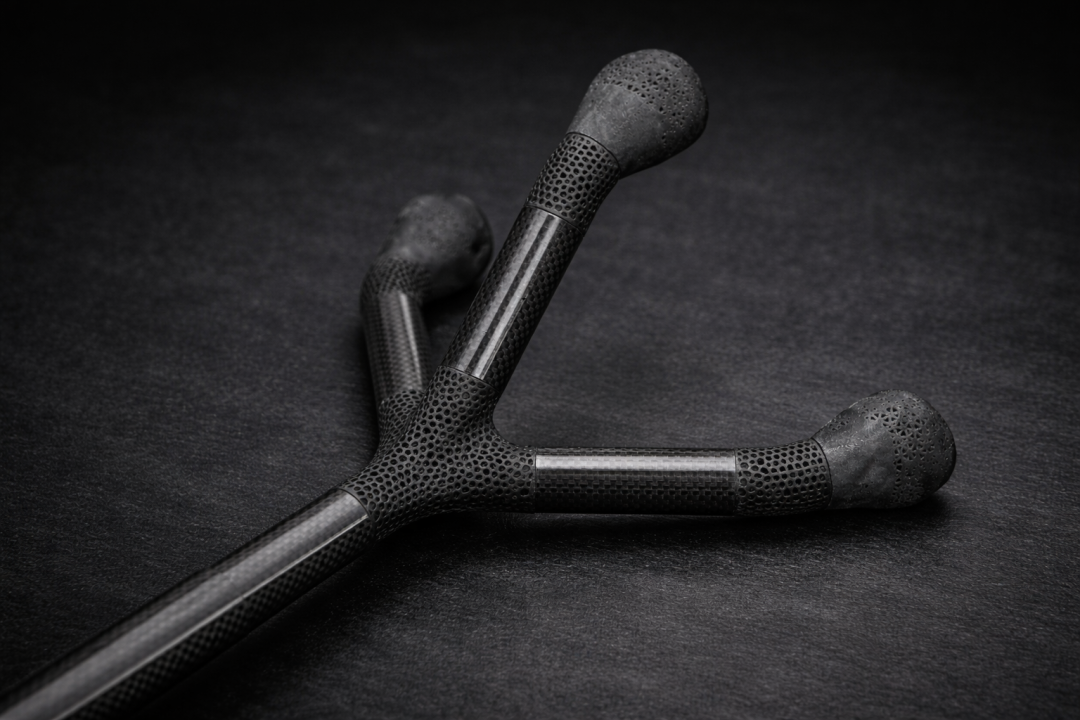
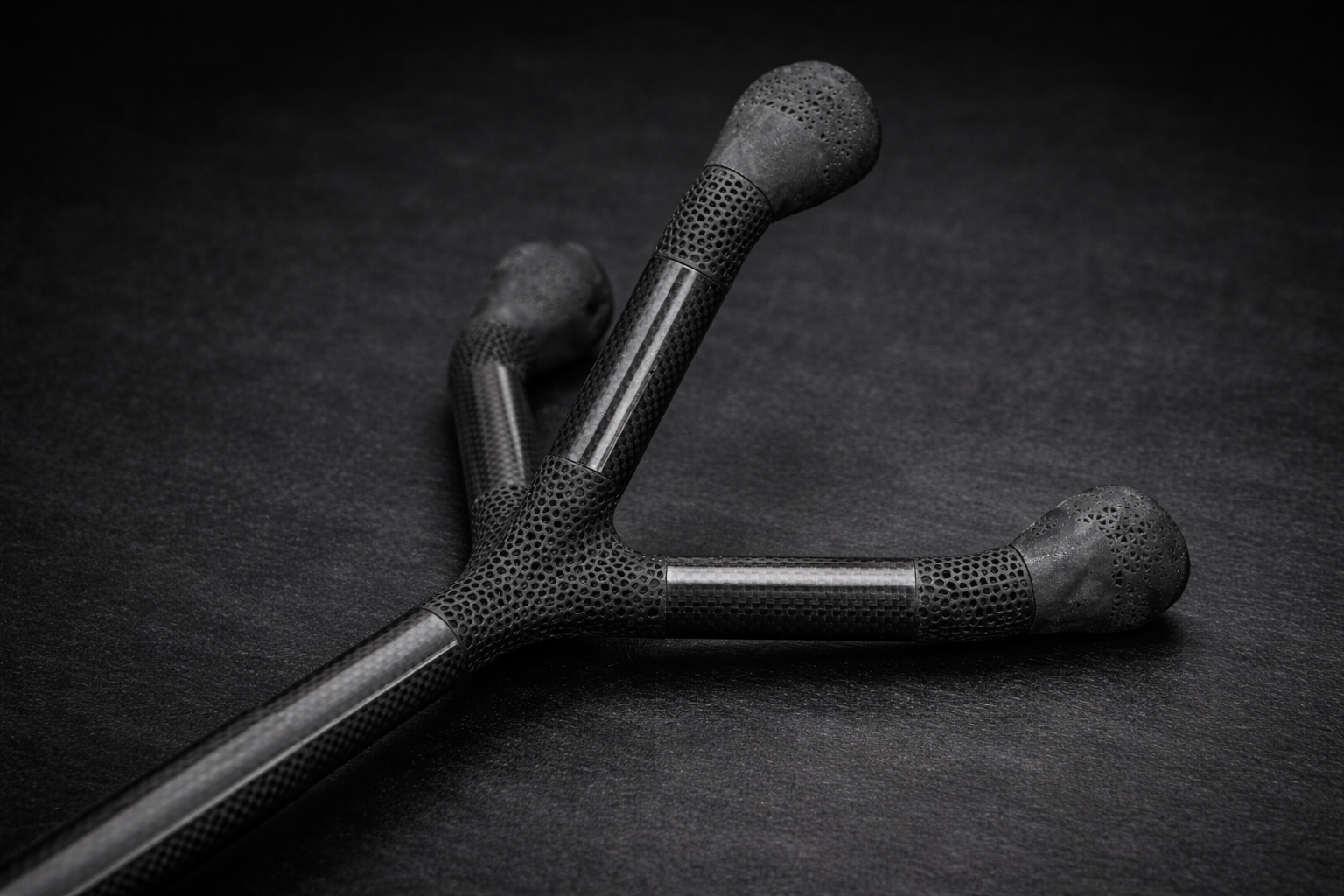
Stability is strongly influenced by the performance of the ground-contact features. To enhance traction and impact absorption, ITERATE developed the feet using EPU 90 Pro, a flexible elastomer with high tear strength and excellent mechanical recovery. This ensures reliable grip across a variety of indoor and outdoor surfaces while maintaining consistent performance under repeated loading.
For the structural joints connecting the walking stick to its legs, ITERATE selected RPU 130, a production-grade polyurethane that delivers the stiffness, impact resistance and dimensional stability required for load-bearing components.
The resulting design demonstrates how combining multiple materials within a single additive manufacturing platform enables a hybrid system – rigid connectors for structure, flexible elastomers for comfort and stability, and a scalable handle solution that supports both prototyping and production. The outcome is a more durable, ergonomic walking aid that improves confidence and mobility for young users.